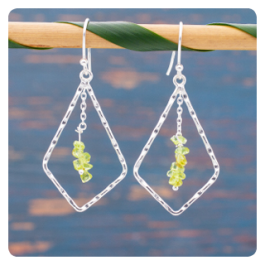
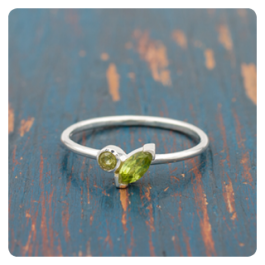
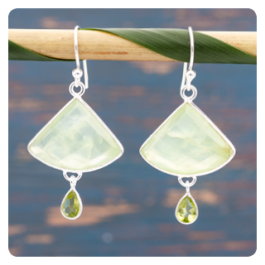
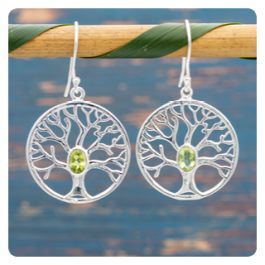
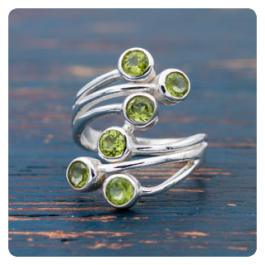
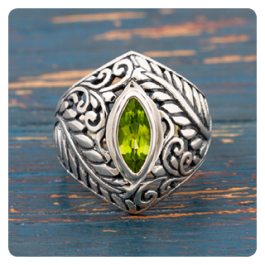
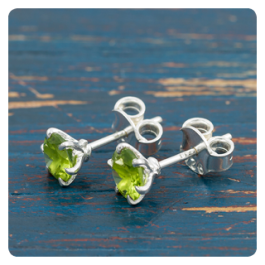
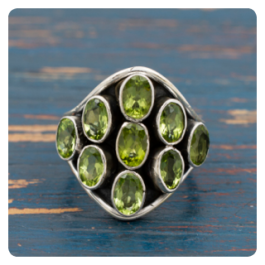
You have no items in your shopping cart.
Swipe to the left
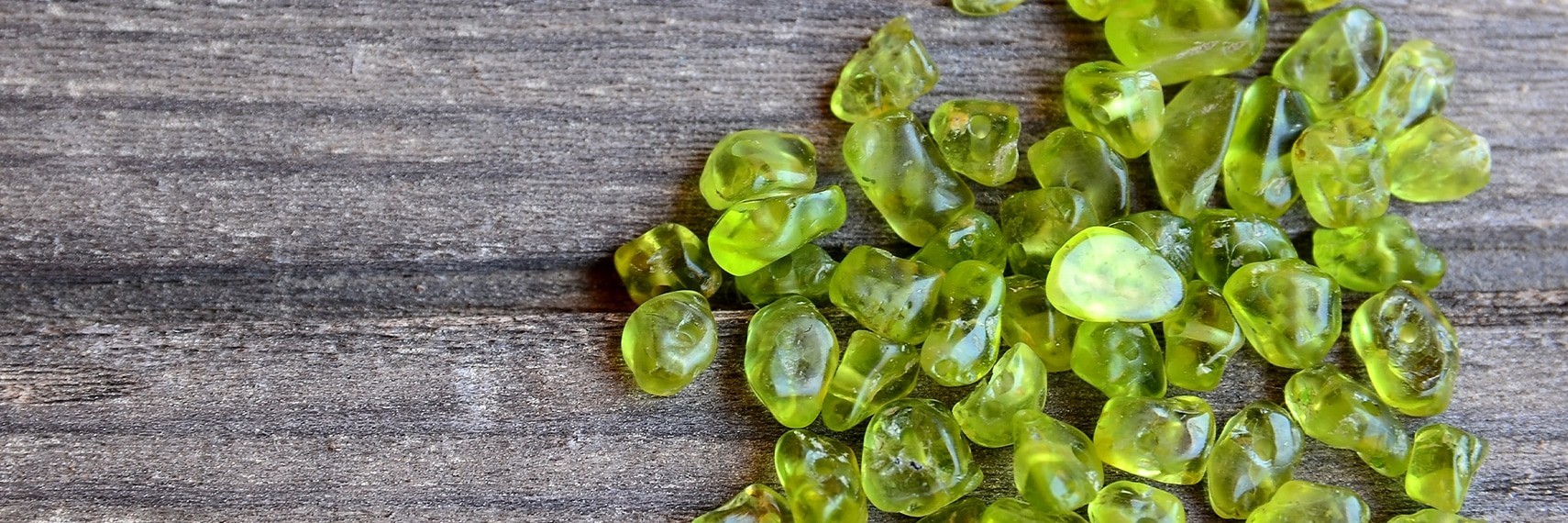
PERIDOT - The precious gemstone of the Egyptian rulers
November 12, 2022
There are several hypotheses about the name of this exceptionally interesting precious gemstone. Some claim that the name comes from the Arabic word "faridat," meaning "precious gemstone," while others suggest that it is derived from Old French, meaning "gold." For this unique green mineral, also known as olivine or chrysolite, we know that in the past, it was more valuable than diamonds.
Peridot is an idiochromatic silicate, meaning that the presence of iron in its composition is the reason for its attractive color and intensity. The color range of peridot is not very wide, varying only in shades of green – from yellowish-green, olive, or apple green to greenish-brown. Its warm and most popular shade is the yellowish-green, and the highest quality deposits of peridot are found in Pakistan, near the border with Afghanistan. It is also found in Myanmar, China, the USA, Africa, and Australia.

Peridot has an exceptionally high double refraction, which can be observed by carefully examining it. In such a case, it can be noticed that light splits into two rays when passing through the stone. The finest peridot is clear to the naked eye, but with magnification, small black spots in its color may be observed.
This precious gemstone has been preferred by jewelers for a long time. The earliest records of its extraction date back to papyri from 1500 BCE when the Egyptians mined it on Zabargad Island in the Red Sea to adorn the jewelry and vessels of their rulers. Even Tutankhamun possessed a peridot pendant, and for Cleopatra, it was the favorite among all other gemstones. Historians are convinced that the emeralds she adorned herself with were, in fact, peridots. Notably, peridot was also called the "evening emerald" because, when viewed under artificial light, it shines in a brilliant green! The extraction of peridot was destined for the pharaohs' treasury and occurred both during the day and at night due to the stone's exceptionally strong brilliance at night.
For the Egyptians, peridot is the mineral of the Sun, and it is not accidental that it is their national gemstone. The historical retrospective of precious gemstones introduces us to peridot in all significant periods of human history. This is a gemstone that has been inlaid on church caskets, part of kings' wealth, and during the Middle Ages, crusaders transported it, adorning eating utensils and entire garments with it.
It is believed that peridot has an earthly origin, but in 2003, deposits of it were found on Mars, making it the first mineral discovered on another planet.
Among the strongest influences attributed to peridot since ancient times are its abilities to relieve tension, balance, free the mind from envious thoughts and moods, reduce stress, and help its possessor be more eloquent. If placed in a golden vessel, peridot will fully develop its potential and magical power, making it suitable for use as a talisman. The stone's power is greatest when placed on the right hand.
Peridot protects its possessor from the evil eye while strengthening vision and bringing a good mood. The yellowish-green color of peridot categorizes it among precious gemstones that aid in the treatment of the liver, digestive problems, kidneys and the excretory system, gallbladder, and stomach. It is believed that this stone slows down the aging process by enhancing metabolism and positively influencing the skin.
Peridot sharpens the mind and opens it to new levels of consciousness. It dispels lethargy and restores conscious concentration on significant aspects of life. With the help of peridot, one can acknowledge mistakes and move forward without feeling guilt. It encourages its wearer to take responsibility for their own life, and the greenish hues of the stone soothe, balance, and bring hope and joy to life.

Like all other precious gemstones, caring for peridot requires cleaning it with cool soapy water, followed by rinsing it in clean running water and allowing it to absorb light. It is advisable not to expose it to strong temperature influences and to protect it from scratching.
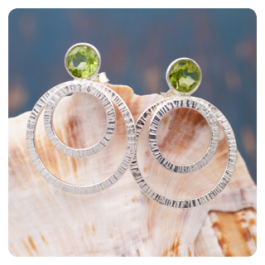
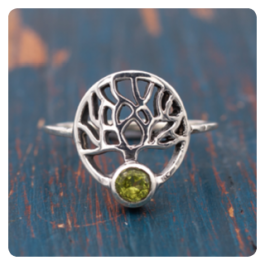
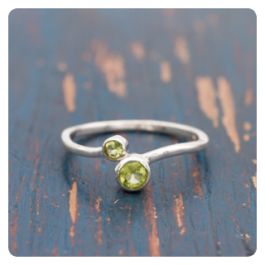
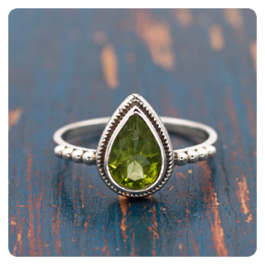
Have you fallen in love with peridot yet? If you are drawn to the mystique and power of this precious gemstone, choose your new peridot jewelry from our treasure trove!